Dog Care
A Practical Guide to Safe and Effective DIY Dog First Aid at Home
Equip yourself with essential first aid knowledge to handle minor dog injuries safely at home, helping your furry friend recover comfortably while knowing when professional care is needed.
Introduction to DIY Dog First Aid at Home
Accidents and minor injuries can happen to dogs just like humans. Being prepared to provide basic first aid at home can make a significant difference in your dog's comfort and recovery. This practical guide focuses on simple, safe interventions you can perform yourself, and clearly distinguishes between what you can handle and what needs a veterinarian. The key to safe DIY first aid is knowing your limits—always approach calmly and err on the side of caution. This guide is specifically for minor, non-life-threatening situations; it is not a substitute for professional veterinary care. Use it as a decision-making tool to confidently identify when to act and when to call the vet.
When to Treat at Home vs. When to See a Vet
Use this quick decision guide to assess your dog's injury:
- Treat at home if: Minor cuts, scrapes, small burns, mild limping without swelling, superficial injuries not bleeding heavily, and your dog is alert and acting normally.
- See a vet immediately if: Deep wounds, persistent bleeding, difficulty breathing, suspected fractures, seizures, heatstroke, eye injuries, severe pain, or if your dog is lethargic or collapsed.
- When in doubt, call your veterinarian. Quick professional advice can prevent complications.
Essential Supplies for Your DIY Dog First Aid Kit
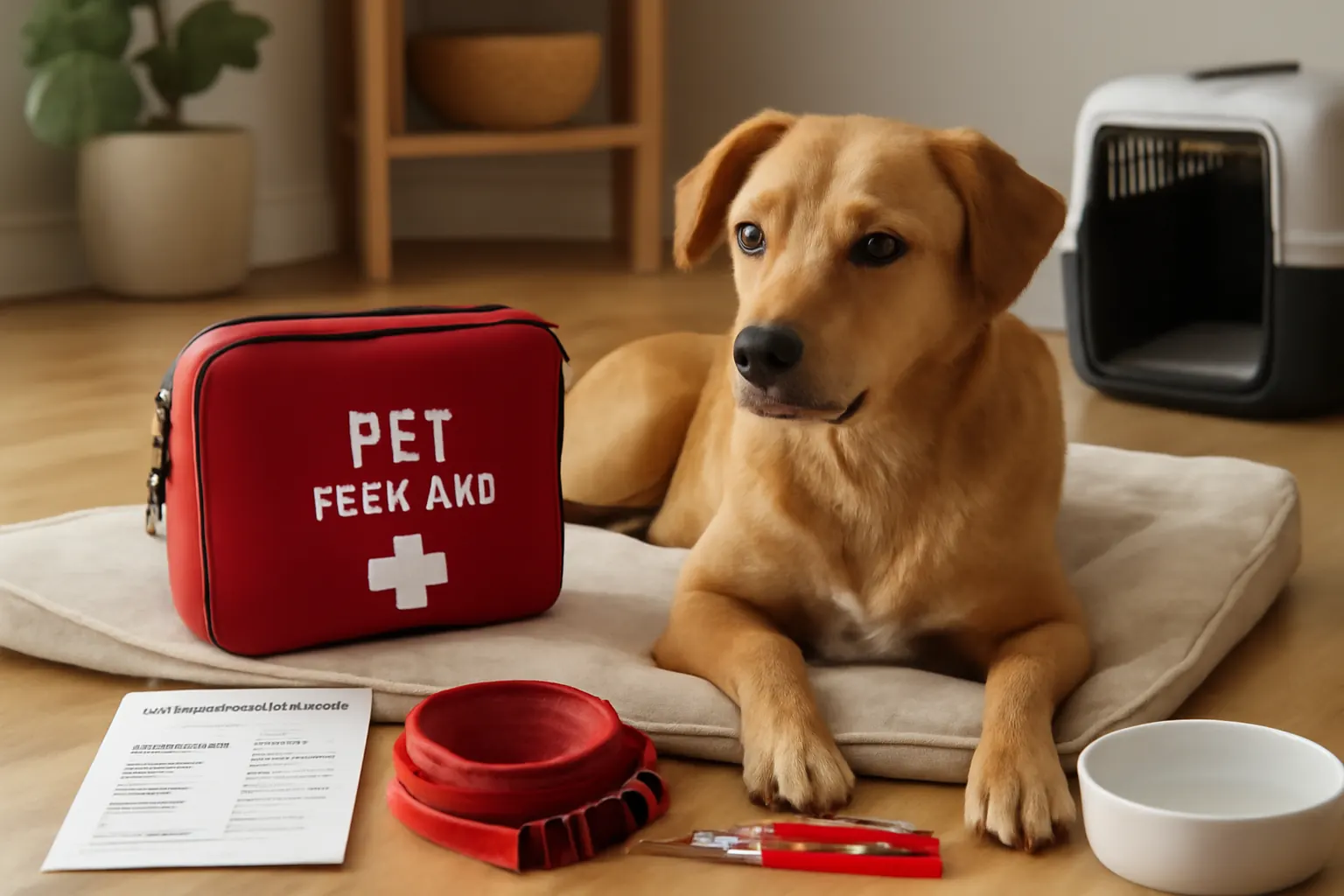
Having a well-stocked first aid kit ready is the first step. Essential items include:
- Sterile gauze pads and roll bandages
- Adhesive tape safe for pets
- Antiseptic wipes or solution suitable for dogs (chlorhexidine or povidone-iodine)
- Digital thermometer
- Scissors and tweezers
- Latex or nitrile gloves
- Hydrogen peroxide (3%) to induce vomiting but only under vet guidance
- Saline solution for cleaning wounds and eyes
- Styptic powder or pencil to stop minor bleeding from nails
- Soft muzzle or cloth to protect yourself if your dog is anxious or in pain
If you don't have all these items, improvise with clean cloths, a shirt as a muzzle, and a bag of frozen peas for cooling. The key is to remain calm and use what you have.
Common At-Home First Aid Scenarios and How to Handle Them
1. Minor Cuts and Scrapes
- Clean the wound gently with saline solution.
- Apply a thin layer of pet-safe antiseptic.
- Cover with sterile gauze and secure with bandage. Change daily.
- Monitor for signs of infection: swelling, redness, discharge, or odor.
- Prevent licking with an Elizabethan collar if needed.
- If the wound is deep, continues bleeding, or shows infection, contact your vet.
2. Burns or Thermal Injuries
- Immediately cool the area with lukewarm (not cold) water for 10–15 minutes.
- Do not apply ointments, butter, or creams unless prescribed by a vet.
- Cover with a clean, non-stick pad and seek veterinary assessment promptly. Burns can easily become infected.
3. Choking or Breathing Difficulties
- If your dog shows signs of choking (gagging, pawing at mouth, difficulty breathing), gently open its mouth to check for visible objects.
- Remove any obstruction carefully with tweezers if visible and easily accessible.
- If obstruction is not removable and breathing is blocked, seek emergency veterinary care immediately.
- Do not perform the Heimlich maneuver unless you are trained; it can cause injury.
4. Heatstroke
- Move your dog to a cool area immediately if panting excessively, drooling, weak, or unsteady.
- Offer small amounts of cool (not cold) water and apply cool damp towels to the body (especially groin, armpits, and paws).
- Do not use ice water or overcool. Seek emergency veterinary care urgently as heatstroke can be fatal.
5. Seizures
- Keep your dog safe by moving furniture and turning off loud noises.
- Do not restrain the dog or put anything in its mouth.
- Time the seizure. If it lasts longer than 3 minutes or repeats, call your vet immediately.
- After the seizure, keep calm and contact your vet for guidance.
How to Perform a Quick Health Check at Home
Before treating any injury, check your dog's vital signs: gum color (should be pink and moist), temperature (101-102.5°F via rectal thermometer), and capillary refill time (press gum, color should return in 1-2 seconds). This helps you assess severity.
Infection Detection
Monitor for redness, swelling, heat, pain, discharge, or odor. If any appear within 24-48 hours, see a vet. Infection can worsen quickly.
When to Contact Your Veterinarian
- The injury is deep, bleeding persistently, or affecting mobility.
- Presence of swelling, foul odor, pus, or worsening condition.
- Your dog has difficulty breathing or shows signs of severe pain.
- Loss of consciousness, repeated seizures, or heatstroke symptoms.
- If you are unsure about the severity of an injury or illness.
Final Thoughts
DIY dog first aid is about being prepared, knowing what to do, and recognizing when to step back. Assemble your kit today, practice the routine with your dog, and always err on the side of caution. Your calm, informed response can prevent a minor issue from becoming an emergency.
FAQ
What should I include in a basic dog first aid kit?
Include sterile gauze, bandages, adhesive tape, antiseptic chlorhexidine or povidone-iodine, digital thermometer, scissors, tweezers, gloves, saline solution, styptic powder, and a soft muzzle. Store in a waterproof container and check monthly.
How do I clean a minor cut on my dog at home?
Use sterile saline solution (available at pharmacies) or a homemade solution of 1/4 teaspoon salt in 1 cup boiled and cooled water. Gently flush the wound, pat dry with sterile gauze, and apply a thin layer of pet-safe antiseptic. Avoid hydrogen peroxide unless directed by a vet.
What should I do if my dog suffers a minor burn?
Immediately cool the burned area with lukewarm (not cold) water for 10–15 minutes. Do not apply any ointments or creams. Cover with a clean, non-stick pad and contact your veterinarian, as burns can easily become infected.
How can I tell if my dog is choking?
Signs include gagging, pawing at the mouth, difficulty breathing, or blue gums. If you see a visible object, gently remove it with tweezers. If the obstruction is not easily accessible or breathing stops, seek emergency veterinary care immediately. Do not perform the Heimlich maneuver unless trained.
When should I take my dog to the vet after a first aid incident?
Contact your vet immediately if the wound is deep, bleeding persists, your dog has difficulty breathing, shows signs of severe pain, has a seizure lasting more than 3 minutes, or if you are unsure about the severity of the injury. When in doubt, always err on the side of caution.