Product Guides
How to Remove Pet Hair from Carpet Without a Vacuum: 5 DIY Methods That Actually Work
Your vacuum broke or you just need a quick fix? These five DIY methods will lift pet hair from carpet using household items.
Why Skip the Vacuum?
Vacuum cleaners are great, but they can be loud, bulky, or inconvenient. When your vacuum is broken, not nearby, or you just want a quiet approach, these five methods will get pet hair off your carpet effectively. Each uses simple household tools and works on low-pile to medium-pile carpets. Always test a small area first to avoid damage, and keep pets away while cleaning.
Method 1: The Squeegee
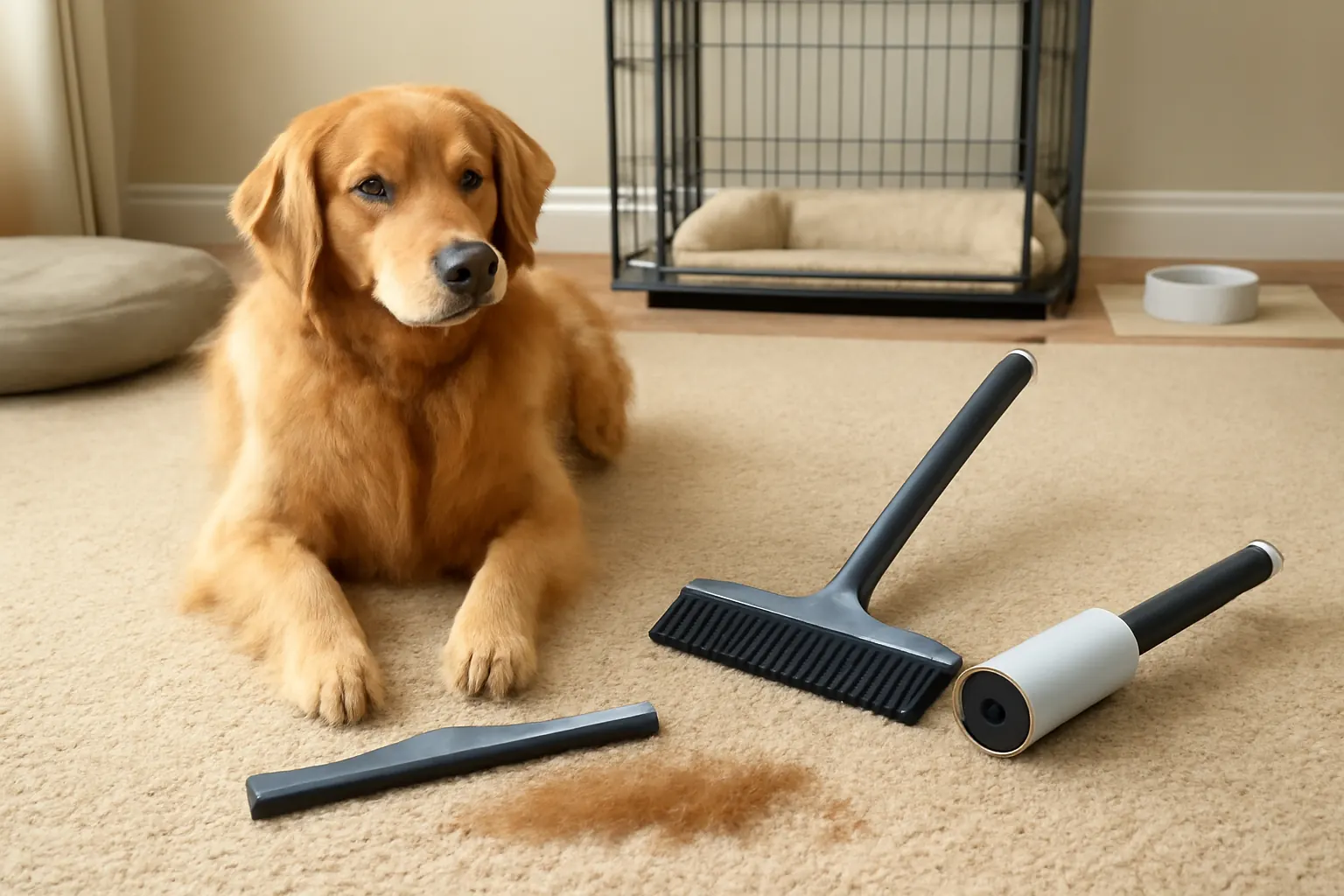
A standard window squeegee is surprisingly effective. The rubber blade creates static electricity that pulls hair to the surface. Step-by-step: Drag the squeegee across the carpet in one direction, applying gentle pressure. The hair will accumulate into small piles. Collect the piles with your hand or a dustpan. Best for: Low-pile carpets. Common mistake: Pressing too hard can fray fibers – use light to moderate pressure. Clean the blade between strokes to maintain effectiveness.
Method 2: Rubber Broom
Rubber brooms are designed for pet hair. The rubber bristles attract hair through static and friction. Step-by-step: Sweep firmly in long, overlapping strokes. The hair gathers in clumps. Some models have a built-in squeegee edge for final collection. Best for: Medium-pile carpets and large areas. Common mistake: Not cleaning the broom frequently – rinse the bristles or wipe them down to remove trapped hair and restore static charge.
Method 3: Carpet Rake
A carpet rake (or pet hair rake) has metal tines that dig into carpet fibers to lift embedded hair. Step-by-step: Use it like a rake, pulling toward you in smooth strokes. This loosens deeply trapped hair. After raking, collect the debris by hand or with a lint roller. Best for: High-pile carpets. Safety: Avoid raking too aggressively, as it can damage carpet backing. Work with the grain of the carpet.
Method 4: Damp Sponge
Lightly dampen a clean sponge (wring it out well – it should be barely moist) and wipe across the carpet. The moisture helps gather hair. Step-by-step: Rinse the sponge frequently in clean water to avoid redepositing hair. This method is best for small areas or spot cleaning. Common mistake: Using too much water can lead to mold or carpet damage. Never soak the carpet. Avoid on delicate fibers like berber.
Method 5: Lint Roller
For quick touch-ups, a lint roller with strong adhesive works on small patches of carpet. Step-by-step: Roll it over the affected area, then peel off the sheet when it loses stickiness. This is ideal for edges, corners, or spots near furniture. Best for: Small messes. For large areas, combine with other methods.
Which Method Is Best for Your Carpet?
- Low-pile carpet: Squeegee or rubber broom work fastest.
- Medium-pile carpet: Rubber broom or carpet rake give best results.
- High-pile carpet: Carpet rake is most effective; supplement with damp sponge for stubborn hair.
- Large rooms: Rubber broom covers ground quickly.
- Small messes: Sponge or lint roller are convenient.
Tips for Success
- Work in one direction to avoid scattering hair.
- Collect hair into a pile before picking it up – a dustpan works well.
- Clean your tools frequently: rinse the squeegee and sponge, tap out the broom, and empty the rake.
- For best results, use a carpet rake first to loosen hair, then a rubber broom to gather it.
- Brush your pet regularly to reduce the amount of loose hair on carpets.
These DIY methods are pet-safe, quiet, and require no electricity. They won't replace a vacuum for deep cleaning, but for daily maintenance or emergency situations, they get the job done.
FAQ
Can a squeegee damage my carpet?
If used gently on low-pile carpet, a squeegee won't damage fibers. Avoid pressing too hard or using on delicate fringes. Always test a small area first.
Does the rubber broom work on all carpet types?
Rubber brooms work best on low- to medium-pile carpets. On high-pile carpets, they may not reach deeply embedded hair. Use a carpet rake first for deep removal.
How often should I use these methods?
For moderate shedding, once or twice a week is enough. For heavy shedders, you may need daily touch-ups. Combine with regular brushing of your pet to reduce loose hair.
What if the hair is deeply embedded?
Start with a carpet rake to bring hair to the surface, then follow up with a rubber broom or squeegee. For very stubborn areas, a damp sponge helps lift hair.
Can I use a lint roller on the whole carpet?
Lint rollers are best for small areas. Using them on an entire carpet would be time-consuming and expensive. Reserve them for touch-ups and corners.