Dog Care
How to Remove Pet Odor from Upholstery: A Step-by-Step Guide for Dog Owners
A practical, room-by-room guide to eliminating stubborn dog odor from your couch, armchairs, and upholstered furniture using safe, effective methods that work for busy pet owners.
Few things are more frustrating than sinking into your favorite couch only to be hit by a wave of wet-dog smell—especially right after you’ve cleaned. Upholstered furniture acts like a sponge for pet oils, dander, and outdoor grime, so a quick spritz of fabric refresher rarely gets to the root of the problem. This guide walks you through a proven, step-by-step method to remove stubborn dog odor from upholstery safely, using tools and cleaners you likely already have at home.
Step 1: Pinpoint the source of the odor
Before you start cleaning, do a quick inspection. Run your hand over the fabric to find damp or greasy spots. Pay attention to armrests, seat cushions (especially where your dog rests their head), and the backrest. If you have a UV blacklight, use it in a darkened room to reveal hidden urine or saliva stains. Identifying the most soiled areas lets you target them directly instead of wasting product on clean sections.
Readers may also find Steam Mop vs Wet Mop for Homes with Pets: Which Is Safer and More Effective?, Lint Roller vs Rubber Pet Hair Remover: Which Effectively Tackles Fur at Home?, and Best Place for a Litter Box in a Small Apartment: Keep Odors and Tracking Under Control useful. For more stories like this, browse our Product Guides section.
Step 2: Vacuum every inch of the upholstery
Use a vacuum with a HEPA filter and a motorized upholstery attachment. Go over the entire surface—seat cushions, back cushions, armrests, and even the crevices where crumbs and hair collect. If your cushions are removable, take them off and vacuum both sides, as well as the frame underneath. This step removes loose fur, dander, and dust that hold onto odor. A thorough vacuuming also makes the next cleaning steps more effective by letting cleaners penetrate the fabric rather than sitting on top of hair and debris.
Step 3: Apply an enzymatic pet odor remover
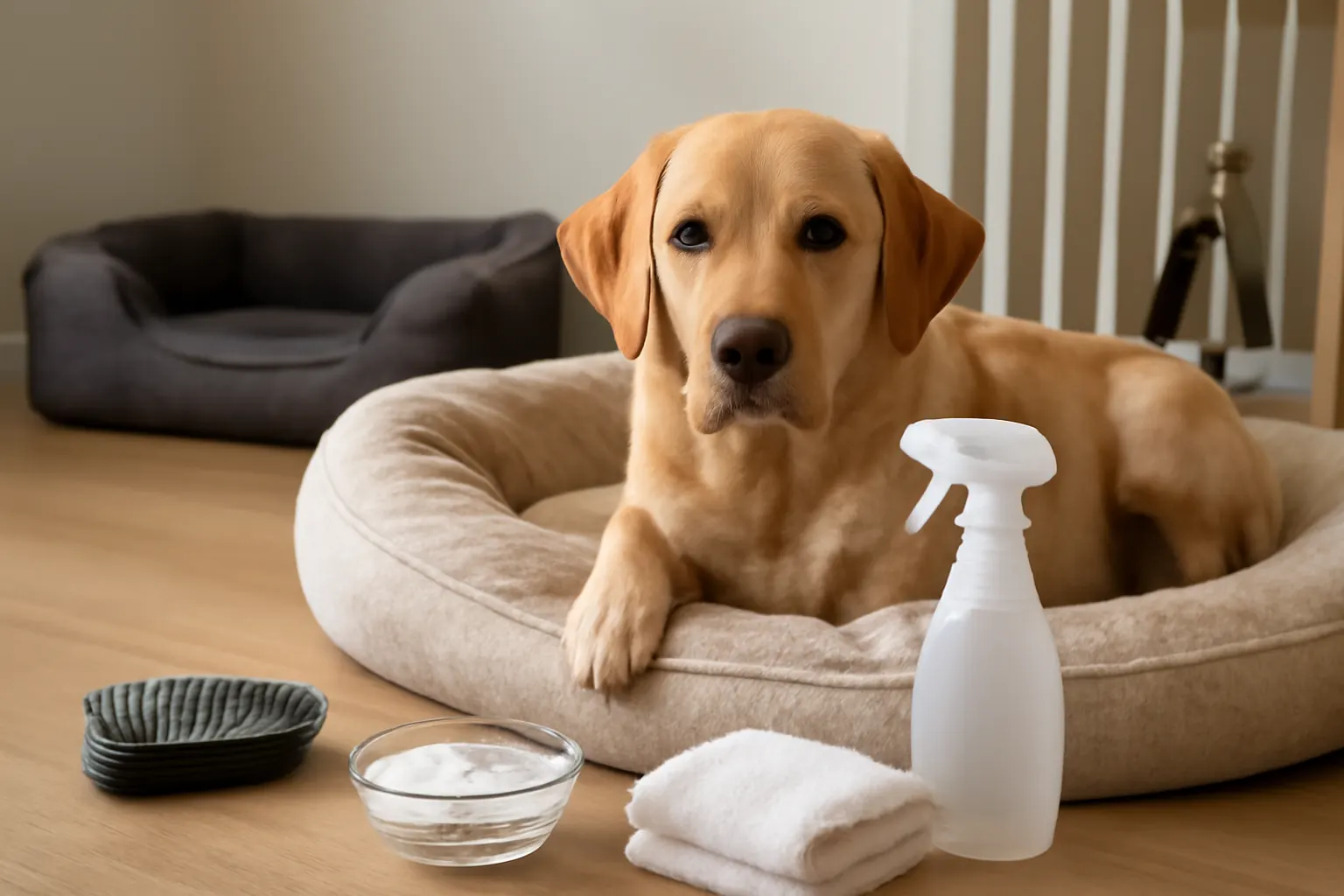
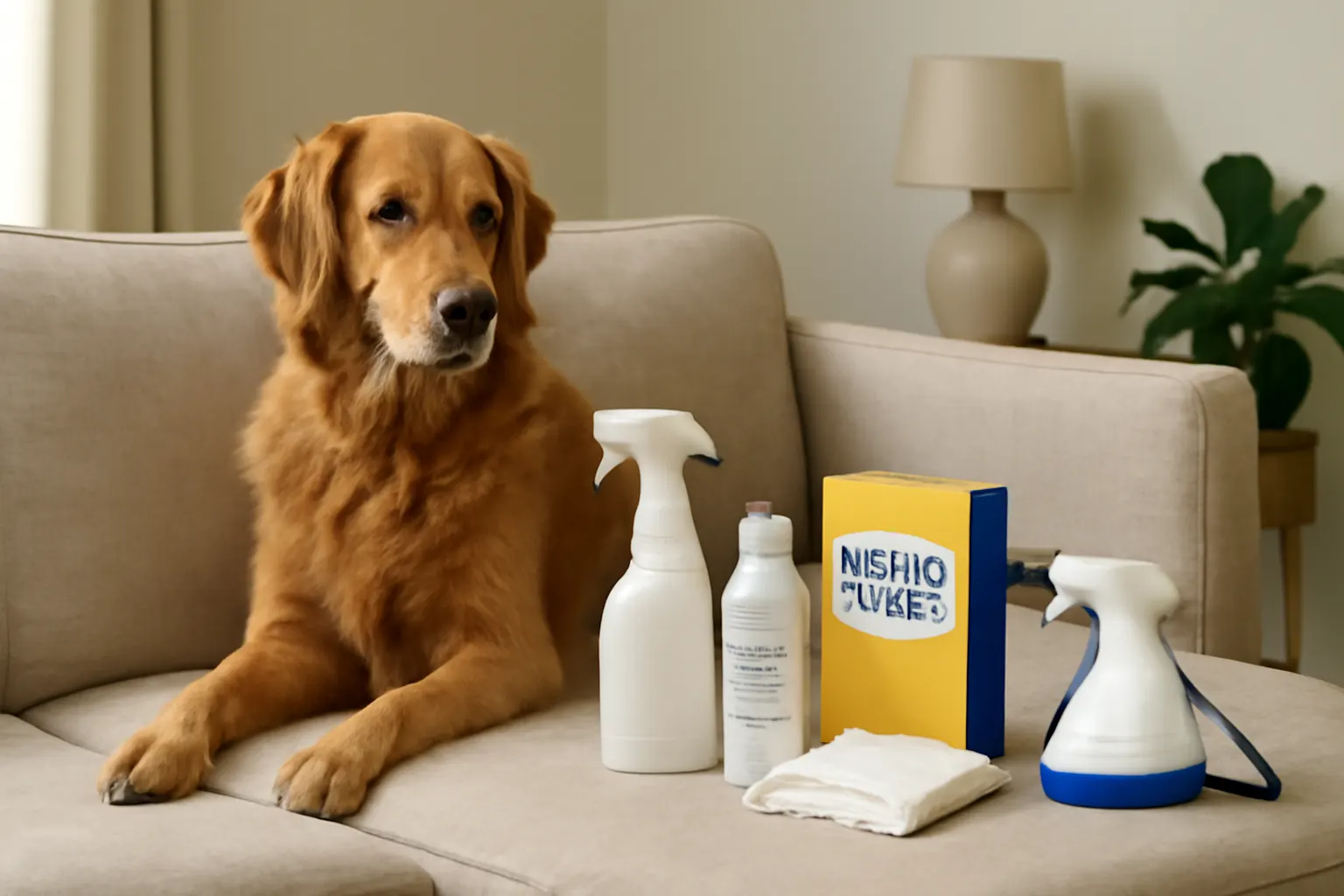
Enzymatic cleaners (look for ones labeled “bio-enzymatic” or “pet stain and odor remover”) work by breaking down the proteins in dog saliva, urine, and dander. Spray the product directly onto the smelly areas until the fabric is damp but not soaking wet. Follow the manufacturer’s instructions for dwell time—usually 10 to 15 minutes—to allow the enzymes to work. Afterward, blot the area with a clean, dry microfiber cloth. Avoid rubbing, which can push the odor deeper into the upholstery fibers. Repeat on heavily soiled spots if the smell persists.
Step 4: Neutralize residual smells with baking soda
Baking soda is a safe, inexpensive way to absorb lingering odors. Sprinkle a generous layer over the entire upholstery surface, making sure to cover armrests, crevices, and cushion tops. Let it sit for at least 15 minutes; for strong, set-in odors, leave it overnight. Then vacuum thoroughly with the upholstery attachment to remove all traces of powder. The baking soda absorbs oils and neutralizes acidic odors without leaving chemical residues, making it pet-safe once vacuumed up.
Step 5: Steam clean water-safe fabrics
If your upholstery’s care tag says “W” or “WS” (water-based cleaning safe), a handheld steam cleaner can provide a deep, sanitizing finish. Fill the steamer with distilled water and, working in small sections, hover the nozzle just above the fabric. The hot vapor loosens embedded grime and kills odor-causing bacteria. Immediately blot away condensation with a microfiber cloth. Always test a hidden area first to make sure the fabric doesn’t shrink or water-spot. Avoid steam on delicate materials like silk or untreated leather.
Mistakes that make dog odor worse
- Avoid ammonia-based cleaners. Ammonia smells like urine to dogs and can actually encourage them to re-mark the area. Stick to enzymatic or oxygen-based formulas.
- Don’t over-wet the fabric. Excess moisture can soak into the cushion foam, leading to mildew and a musty smell that’s even harder to remove.
- Skipping the vacuum step. Cleaning over pet hair and dander just spreads the odor rather than lifting it.
- Using heat before treating stains. Hot water or steam applied to urine proteins can set the stain and odor permanently. Always use cool water for the initial enzyme treatment.
- Ignoring hidden areas. Odor often lingers in the crevices behind cushions and under the couch. Those areas need attention, too.
Safety notes for pet owners
- Always choose pet-safe cleaning products. Look for the EPA Safer Choice label or consult your veterinarian if you’re unsure about a product’s ingredients.
- Keep dogs out of the room while cleaning until all surfaces are dry. Licking even “natural” cleaning residues can cause stomach upset.
- When using baking soda, make sure it’s thoroughly vacuumed up; inhaling fine dust can irritate a dog’s respiratory tract.
- Steam cleaners produce very hot vapor—never point them at your pet or let your dog near the appliance while it’s hot.
- If the odor returns immediately after cleaning, it may be a sign of a urinary tract infection or skin infection. Consult your veterinarian.
Routine to keep upholstery smelling fresh
- Vacuum couches and chairs at least twice a week, using an upholstery attachment.
- Keep a washable throw blanket over your dog’s favorite spot and wash it weekly in hot water with an oxygenated cleaner.
- Wipe your dog’s paws and underbelly with a damp microfiber cloth after walks to reduce the oils and dirt transferred to furniture.
- Every month, do a quick baking soda refresh: sprinkle, wait 30 minutes, vacuum.
- Schedule a full enzymatic deep-clean every 2–3 months, or more often if your dog sheds heavily or has skin issues.
FAQ
Why does my couch still smell like dog after I clean it?
The odor is likely trapped in the cushion foam or deep within the fabric fibers. Surface sprays only mask the smell. You need an enzymatic cleaner to break down the proteins, and baking soda or steam to neutralize what’s left. Also, skip ammonia-based products—they can actually make the smell worse over time.
Can I use vinegar to get rid of dog odor on my couch?
White distilled vinegar can help neutralize mild odors because its acidity breaks down alkaline urine salts. However, vinegar is less effective than enzymatic cleaners for deep-set odors, and the strong vinegar smell may linger. If you use it, mix equal parts water and vinegar, spray lightly, and blot dry. Always test a hidden spot first to avoid discoloration.
How often should I deep-clean my upholstery to keep it smelling fresh with a dog?
For a home with one dog, a full enzymatic deep-clean every 2–3 months, combined with weekly vacuuming and monthly baking soda refreshes, usually keeps odors under control. Dogs that shed heavily, drool a lot, or have skin conditions may need more frequent cleaning. A washable throw blanket on the dog’s go-to spot can extend the time between deep cleans.