Cat Care
A Step-by-Step Guide to Safely Cleaning Your Cat's Ears
Regular ear cleaning is essential for your cat's health. Follow this guide to ensure safe and effective ear cleaning.
Regular ear cleaning is an important aspect of maintaining your cat's health, as it helps prevent infections and removes debris. Here's a step-by-step guide to safely clean your cat's ears:
1. Gather Necessary Supplies
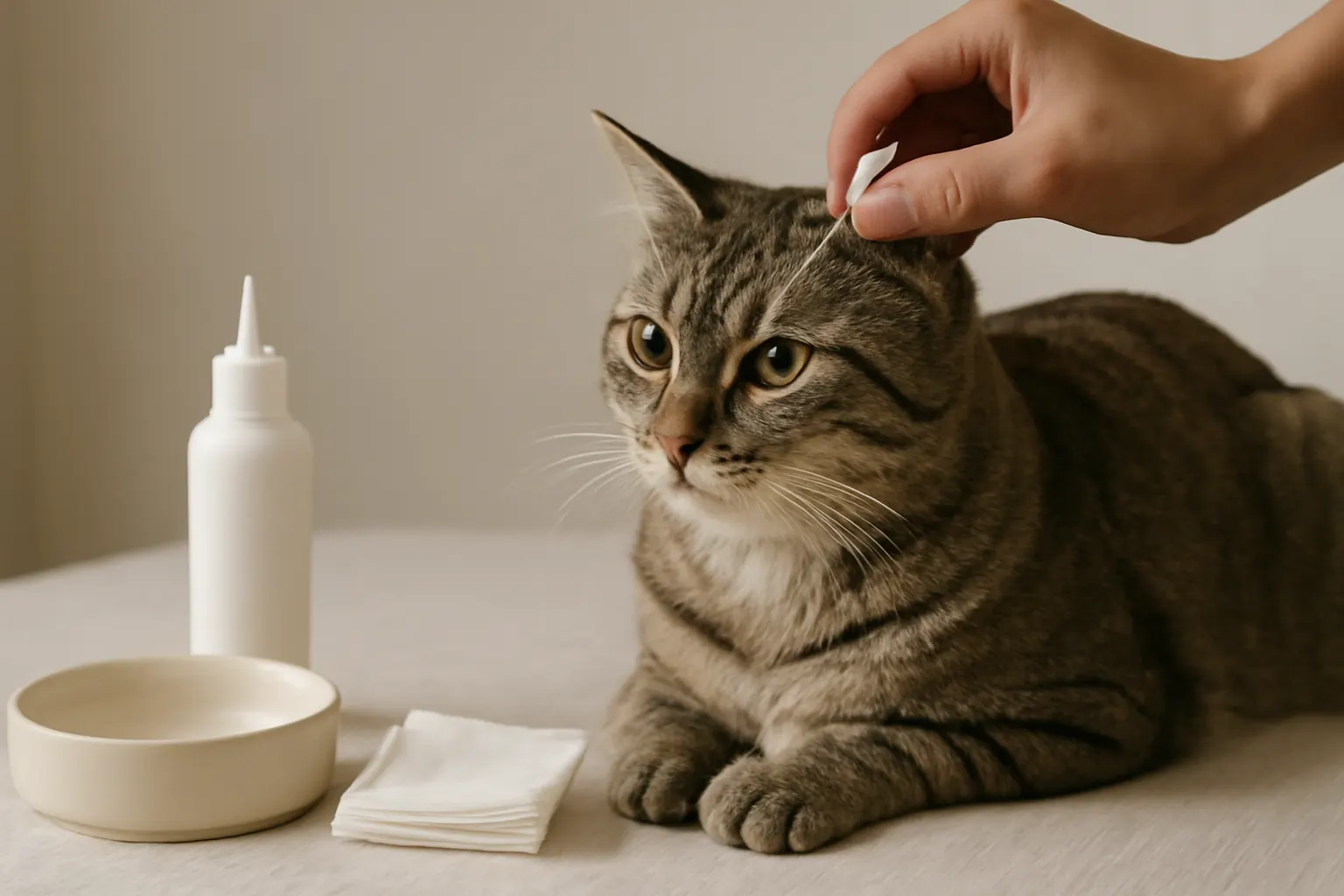
You'll need a veterinarian-approved ear cleaner, cotton balls or gauze, and treats to reward your cat afterward. Avoid using cotton swabs, as they can push debris deeper into the ear canal and potentially damage the eardrum. (petmd.com)
2. Prepare Your Cat
Choose a quiet, comfortable area for the cleaning. Gently wrap your cat in a towel to keep them still and calm. Having a second person assist can be helpful. (webmd.com)
3. Apply the Ear Cleaner
Squeeze a small amount of the ear cleaner onto a cotton ball or directly into the ear canal, following the product's instructions. (petmd.com)
4. Massage the Base of the Ear
Gently massage the base of the ear for about 20 seconds to help loosen debris. (petmd.com)
5. Allow Your Cat to Shake Their Head
Let your cat shake their head to remove excess cleaner and debris. (petmd.com)
6. Wipe the Ear
Use a cotton ball or gauze to gently wipe the ear flap and the visible part of the ear canal. Avoid inserting anything deep into the ear canal. (petmd.com)
7. Repeat on the Other Ear
Follow the same steps for the other ear. (petmd.com)
8. Reward Your Cat
Offer your cat a treat and affection to create a positive association with ear cleaning. (petmd.com)
Regular ear inspections and cleanings can help prevent ear infections and other health issues. If you notice signs of infection, such as redness, discharge, or a foul odor, consult your veterinarian. (petmd.com)
FAQ
Is this advice a replacement for veterinary care?
No. Pet Stories Daily articles are general information. Contact a veterinarian for diagnosis, treatment, emergency signs, or medical decisions.
How does Pet Stories Daily choose sources?
We prioritize reputable sources such as veterinary organizations, official notices, shelters, rescues, public safety agencies, and established reporting.
What should pet owners do first?
Start with the practical takeaway in the article, then check the source note and contact a qualified professional if the issue involves health or safety.