cat-care
Creating a Stimulating Indoor Environment for Your Cat: An Essential Guide
Indoor cats need mental and physical enrichment to thrive. This detailed guide offers practical advice, common mistakes to avoid, and key signs for seeking veterinary help, helping keep your feline friend engaged, active, and healthy indoors.
Many cat owners today choose to keep their feline companions indoors to shield them from outdoor dangers such as traffic, predators, and infectious diseases. While indoor living provides significant safety benefits, it also introduces unique challenges including boredom, stress, and decreased physical activity if the environment lacks sufficient enrichment. To ensure your cat thrives, it is essential to create a rich and engaging indoor environment that supports both their mental and physical health, ultimately enhancing their overall wellbeing and quality of life.
Why Indoor Enrichment Is Vital for Your Cat's Health and Happiness
Cats are natural hunters and explorers, driven by instincts to climb, stalk, hunt, and investigate their surroundings. In the wild, these activities are essential for survival and mental engagement. However, indoor cats often lack outlets to express these natural behaviors, leading to potential issues such as destructive scratching, persistent vocalization, anxiety, and aggression. Additionally, physical inactivity can contribute to obesity, increasing the risk of diabetes, arthritis, and a shortened lifespan.
Proper indoor enrichment replicates the mental and physical challenges that cats encounter outdoors, keeping their minds sharp and their bodies active. This type of stimulation not only reduces stress and anxiety but also supports better behavioral health and strengthens the human-animal bond.
For more information on feline wellbeing, consider exploring related topics such as Choosing the Best Elevated Pet Beds, Managing Dog Fear and Anxiety, and Responding to Pet Food or Product Recalls.
Core Elements of a Stimulating Indoor Environment for Your Cat
1. Providing Vertical and Horizontal Exploration Opportunities
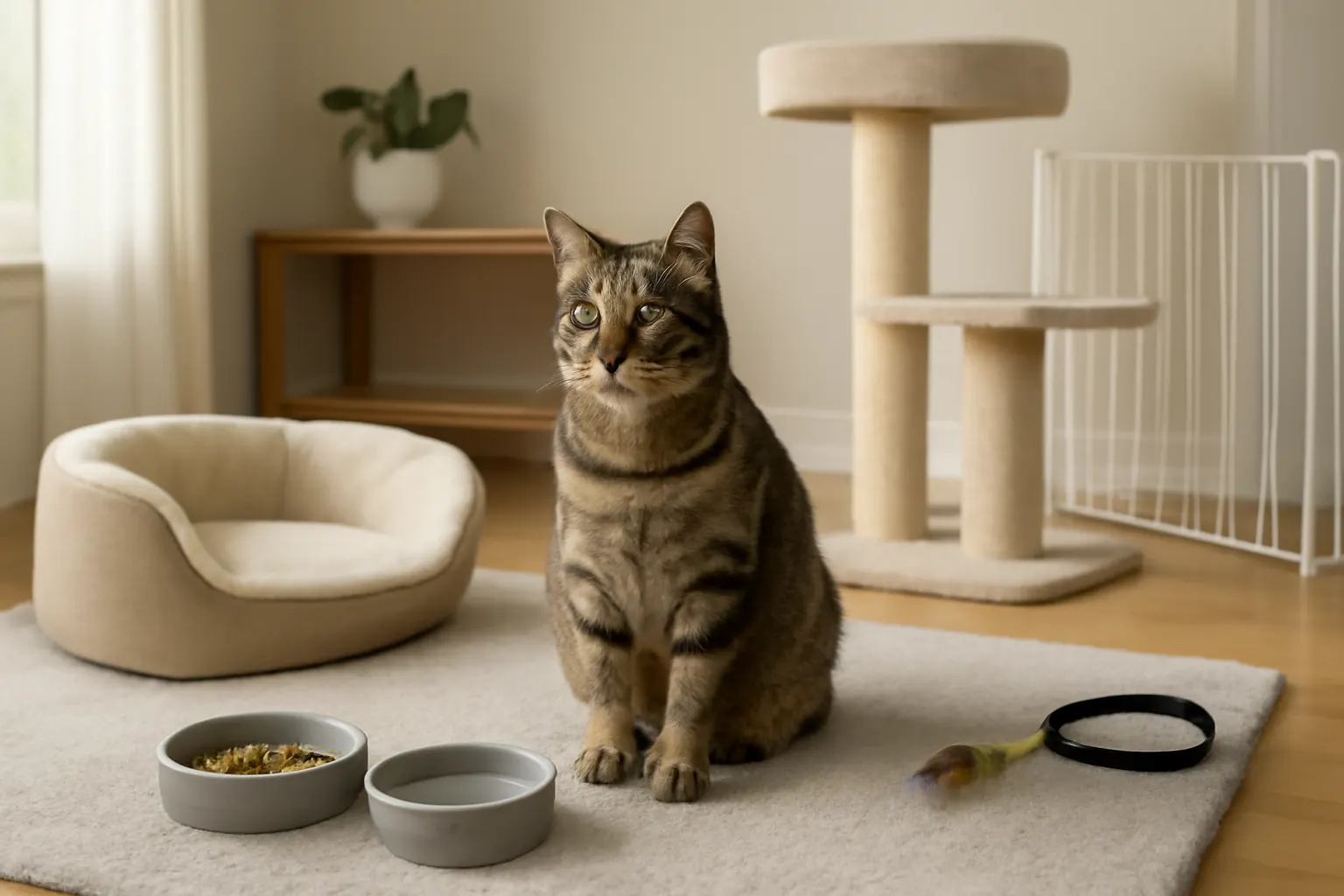
Cats naturally seek elevated vantage points to observe their surroundings safely. Installing cat trees, wall-mounted shelves, and window perches offers essential climbing and lookout spaces. Simultaneously, offering cozy, enclosed hiding spots like covered beds or boxes gives cats secure retreats to relax and reduce anxiety, helping to balance activity with comfort.
2. Offering a Variety of Rotating Toys
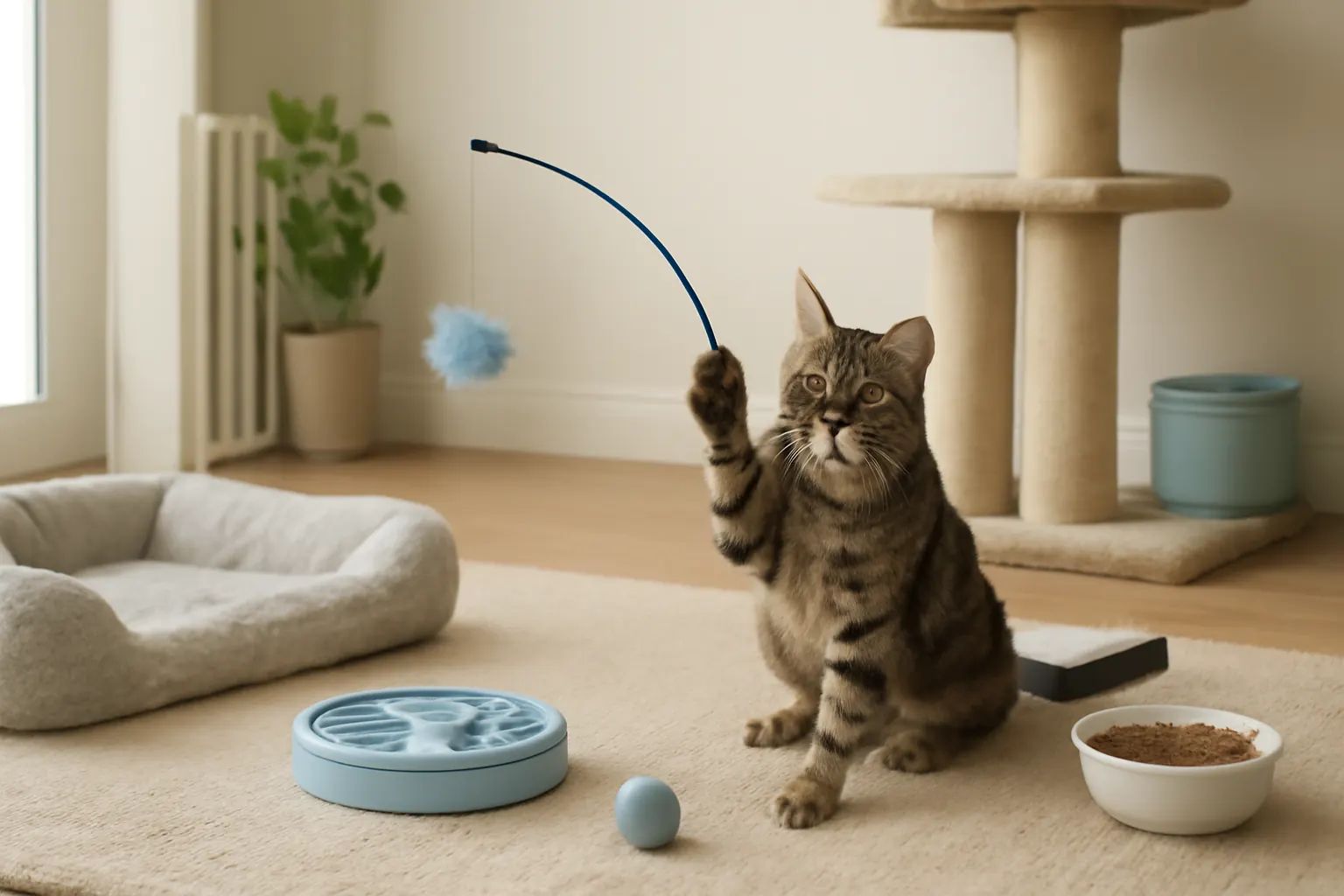
Diverse toys engage different forms of play that stimulate both body and mind. Feather wands, laser pointers, wand toys, balls, puzzle feeders, and stuffed toys each activate unique senses and behaviors. Regularly rotating toys every few days preserves novelty, preventing boredom and increasing curiosity. Always choose toys that are durable, age-appropriate, and safe, avoiding items with small detachable parts or toxic materials.
3. Incorporating Puzzle Feeders and Foraging Activities
Using puzzle feeders or scattering food encourages natural hunting and foraging instincts. This not only slows down eating but also provides mental stimulation and physical activity, which helps maintain a healthy weight. Introduce new puzzle feeders gradually and monitor your cat’s response to avoid frustration or disinterest.
4. Providing Safe Outdoor Views and Enclosed Access
When feasible, offer safe outdoor access through securely enclosed patios or cat-proofed balconies. If outdoor access isn’t possible, position window perches for birdwatching and observing outdoor activity. Visual stimulation through windows provides important enrichment and helps prevent feelings of confinement.
Step-by-Step Plan for Enriching Your Indoor Cat’s Life
- Assess Your Cat’s Current Environment: Observe your cat’s favorite resting and activity spots to identify areas lacking stimulation or comfort.
- Install Vertical Structures: Place cat trees, shelves, and window hammocks tailored to your cat’s preferences and abilities. Ensure all installations are stable and safe.
- Schedule Interactive Play Sessions: Dedicate two daily sessions of 10–15 minutes using feather wands, laser pointers, or other engaging toys to promote physical and mental exercise.
- Rotate Toys Frequently: Maintain a selection of toys and rotate them weekly to sustain your cat’s interest and encourage exploration.
- Introduce Puzzle Feeders: Start with simple feeders and increase complexity gradually, observing your cat’s comfort and engagement levels.
- Create Cozy Hiding Places: Provide secure, quiet spots such as covered beds or cardboard boxes that encourage rest and reduce anxiety.
- Maintain Safety and Hygiene: Regularly inspect toys and play structures for damage, removing any unsafe items immediately.
- Monitor Behavioral Changes and Adapt: Watch for signs of stress, disinterest, or illness and modify enrichment approaches based on your cat’s temperament and health.
Common Indoor Enrichment Mistakes to Avoid
- Neglecting Mental Stimulation: Without sufficient interactive play and environmental novelty, cats can develop boredom-related behaviors such as furniture scratching, excessive vocalization, or aggression.
- Using Unsafe Toys: Avoid toys with small detachable parts, toxic materials, or loose strings that pose choking or poisoning risks. Opt for sturdy, cat-safe alternatives.
- Forcing Interaction: Respect your cat’s mood and boundaries—forcing play when uninterested can cause stress and damage your bond.
- Ignoring Behavioral Changes: Sudden aggression, withdrawal, changes in vocalization, or litter box issues may indicate underlying health or stress problems requiring veterinary assessment.
- Overlooking Age or Health Needs: Older or ill cats may need gentler activities and more quiet downtime tailored to their condition.
When to Consult a Veterinarian or Behavior Specialist
If your cat persistently hides, shows aggression, loses appetite, alters litter box habits, or vocalizes excessively despite enrichment efforts, seek veterinary advice promptly. Many health issues—including dental disease, urinary tract infections, or pain—manifest as behavioral changes.
A veterinarian can diagnose medical problems and may refer you to a feline behavior specialist if behavioral concerns continue. Early intervention is crucial to prevent chronic stress and promote your cat’s wellbeing. Keeping a detailed behavior journal can help identify triggers and patterns to discuss with your vet or behaviorist.
Additional Practical Enrichment Strategies
- Establish consistent playtimes to create a reassuring routine.
- Use toys engaging multiple senses—textures, sounds, and varied movements—to increase interest.
- Introduce new enrichment elements gradually to avoid overwhelming your cat.
- Reward positive behaviors during play with treats to encourage engagement and motivation.
- Simulate prey movement by varying speed and patterns when using toys.
- Incorporate scent enrichment using safe herbs like catnip or silvervine to stimulate curiosity.
- Create multi-room exploratory areas to satisfy territorial instincts and reduce boredom.
Case Example: Transitioning a Cat from Outdoor to Indoor Living
When transitioning a cat from outdoor life to indoor-only, begin by setting up a quiet, comfortable room with familiar bedding and a few favorite toys. Gradually introduce climbing structures and rotate toys to build curiosity. Schedule gentle interactive play to reduce anxiety and foster trust. Monitor for signs of stress such as hiding or over-grooming and adapt enrichment accordingly. Early veterinary evaluation ensures a healthy and smooth adjustment to indoor living.
Summary
Designing a stimulating indoor environment that meets your cat’s natural instincts promotes happiness, health, and longevity. Providing vertical climbing spaces, rotating diverse toys, scheduling interactive play, and encouraging foraging behaviors keep your cat physically and mentally engaged. Observing behavioral changes and seeking timely veterinary support ensure ongoing wellbeing. With intentional enrichment and attentive care, your indoor cat can enjoy a fulfilling, joyful life.
FAQ
How often should I play with my indoor cat to keep them stimulated?
Aim for at least two interactive play sessions daily, each lasting 10 to 15 minutes, to provide your cat with both physical exercise and mental stimulation to prevent boredom.
What types of toys are safe and effective for indoor cats?
Choose sturdy, specifically designed cat toys such as feather wands, balls without small detachable parts, soft stuffed toys, and puzzle feeders. Avoid toys with small parts that can be swallowed or made from toxic materials to ensure safety.
What should I do if my indoor cat suddenly becomes withdrawn or less playful?
Sudden behavioral changes can indicate underlying health or stress issues. Schedule a veterinary check-up promptly to rule out medical problems and address any behavioral concerns early for better outcomes.
Can indoor cats benefit from outdoor access?
Yes, providing safe outdoor access via enclosed patios or cat-proofed balconies can enrich your cat’s experience and mental stimulation. If outdoor access isn’t possible, window perches for bird and outdoor activity viewing offer valuable visual enrichment.
How can I gradually introduce new toys or enrichment activities to my cat?
Introduce new toys or activities slowly and one at a time, observing your cat’s reactions to avoid overwhelm. Reward positive engagement with treats or affection to encourage acceptance and enjoyment.