Cat Care
Best Place for a Litter Box in a Small Apartment: Keep Odors and Tracking Under Control
Struggling with litter box smells in a tight space? Learn where to put the box and how to manage mess without giving up square footage.
Why Placement Matters
In a small apartment, every square foot counts—and the spot you choose for your cat’s litter box can make or break both your home’s freshness and your cat’s willingness to use it consistently. A poorly placed box leads to accidents, tracked litter, and lingering odors that are hard to ignore in a compact living space. Cats are fastidious by nature; if the location feels unsafe or dirty, they’ll avoid it, creating bigger messes elsewhere.
Good placement controls two main problems: odor buildup and litter tracking. The right spot allows air to circulate, keeps the box accessible for daily scooping, and contains kicked-out granules before they spread across your floor.
Where to Place the Litter Box
Focus on quiet, low-traffic areas that still get some airflow. Here are the best options—and how to make them work:
- Bathroom: A natural choice in many apartments. Keep the door slightly ajar or install a cat door to ensure 24/7 access. Place the box on a hard floor, never on a bath mat or rug. An exhaust fan helps draw out odors.
- Laundry room or utility closet: These often have tile floors and ventilation. Just be sure your cat isn’t startled by loud appliances. If the door must stay closed, cut a small cat entry in the wall or door to let them come and go.
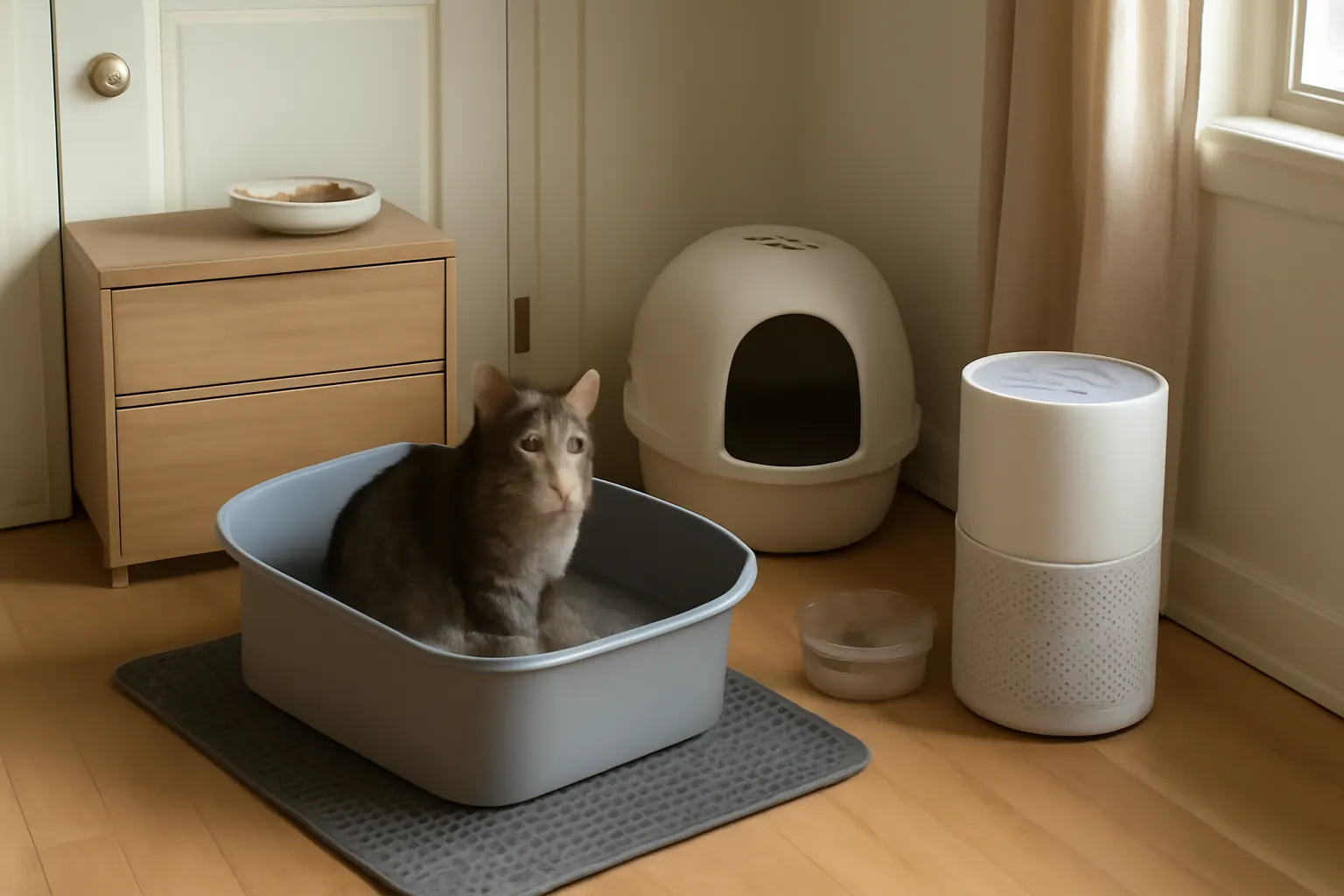
- Living area corner: When bathrooms are too small, set up a dedicated “litter station” in a quiet corner. Use a decorative screen or tall plant to give your cat privacy while hiding the box from view. Place a large litter mat underneath and keep an air purifier nearby.
- Under a sturdy end table or bench: For studios, lifting the box off the floor slightly or tucking it beneath a piece of furniture can save space. Ensure the area remains open on at least one side so your cat doesn’t feel trapped.
Where Not to Put It
Avoid these common mistakes that lead to odor, tracking, or refusal:
- Kitchen: Hygiene aside, the noise and activity can stress your cat. Many cats also dislike eating near their toilet area.
- Carpeted bedrooms or hallways: Carpet fibers trap urine odors permanently even with cleaning, and tracked litter works deep into the pile.
- Closets with no ventilation: Stuffing the box in a dark, stuffy closet concentrates ammonia smells and invites mold. Your cat may avoid it altogether.
- Right next to the TV, speakers, or washing machine: Sudden loud noises scare cats and can lead to litter box aversion.
- Balcony or outdoor area: Cats need consistent, safe access. Weather, noise, or other animals can deter use and create anxiety.
Setting Up the Area
Once you’ve picked a spot, outfit it to contain mess:
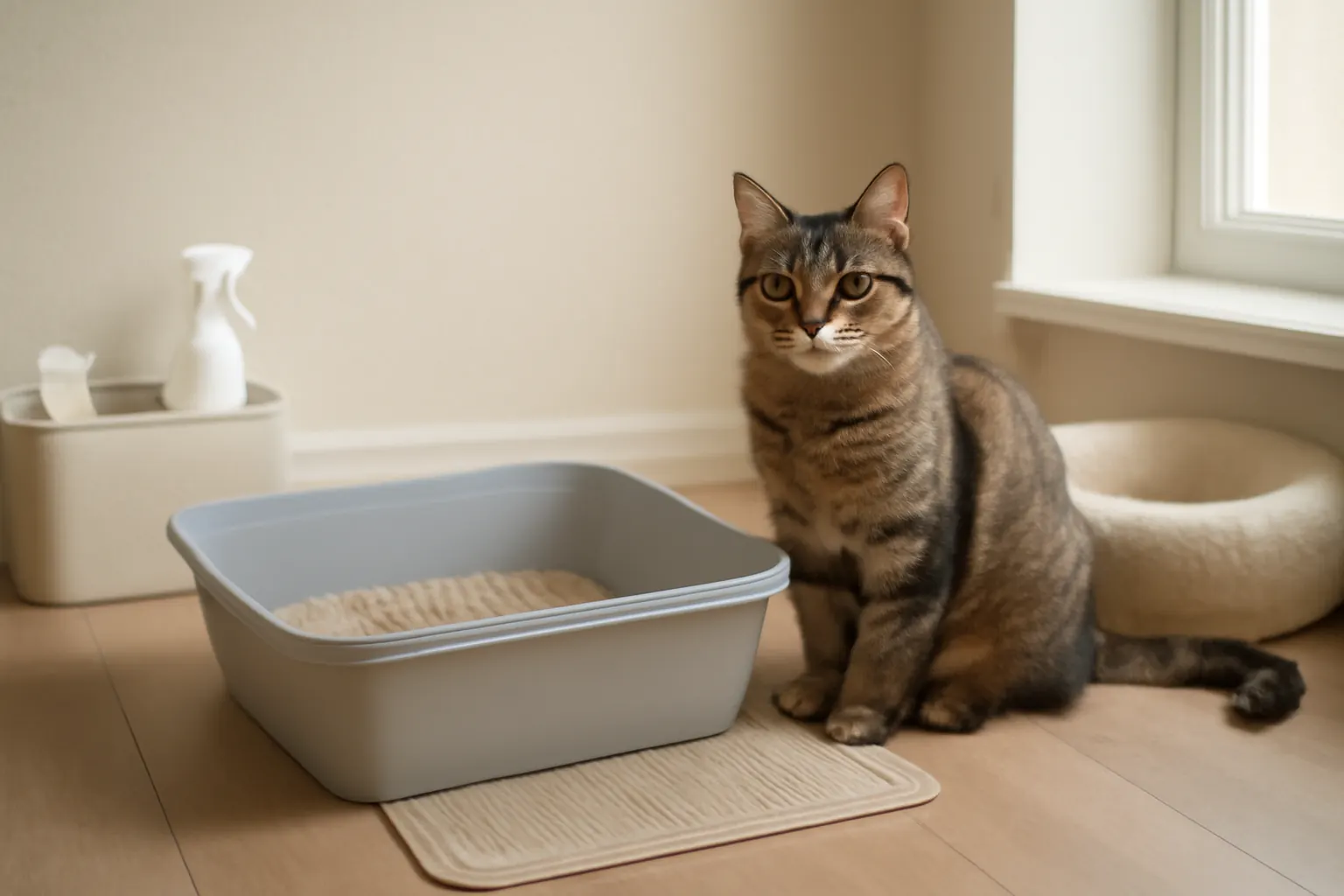
- Use a large litter mat. A ribbed or honeycomb-style mat traps granules as the cat exits. Choose one at least as wide as the box and long enough for a few steps.
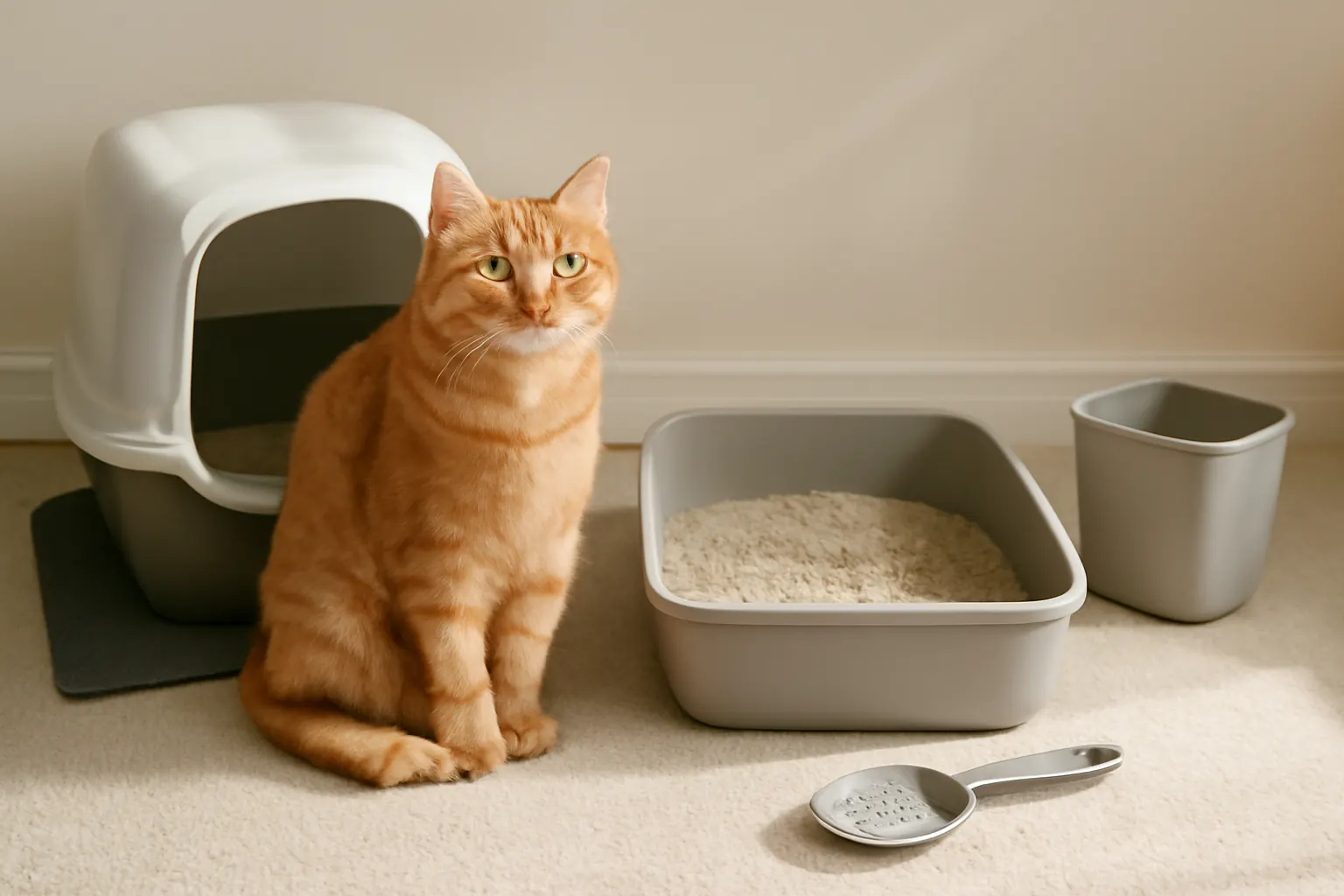
- Try a high‑sided or covered box. A deeper box cuts down on kicked‑out litter, and a covered box hides waste from sight—but only if your cat accepts it. Some cats feel trapped or avoid covered boxes because they can’t see their surroundings.
- Add an air purifier. A small HEPA filter unit placed a few feet away can capture dust and odor particles without needing to burn scented candles, which can irritate cat respiratory systems.
- Keep scooper and waste bags nearby. Store a dedicated scoop in a sealed caddy or drawer so daily maintenance takes seconds.
With a thoughtful setup and consistent cleaning, even the smallest apartment can stay fresh and welcoming for both you and your cat.
FAQ
Can I keep my cat’s litter box in the bedroom?
It’s generally not ideal because bedrooms have carpeting and limited airflow, which trap odors and tracked litter. If you must, use a very large mat, an air purifier, and scoop multiple times daily. However, your cat may feel comfortable in a quiet bedroom as long as it’s not near the bed and you maintain strict cleanliness.
Should I place the litter box near my cat’s food and water?
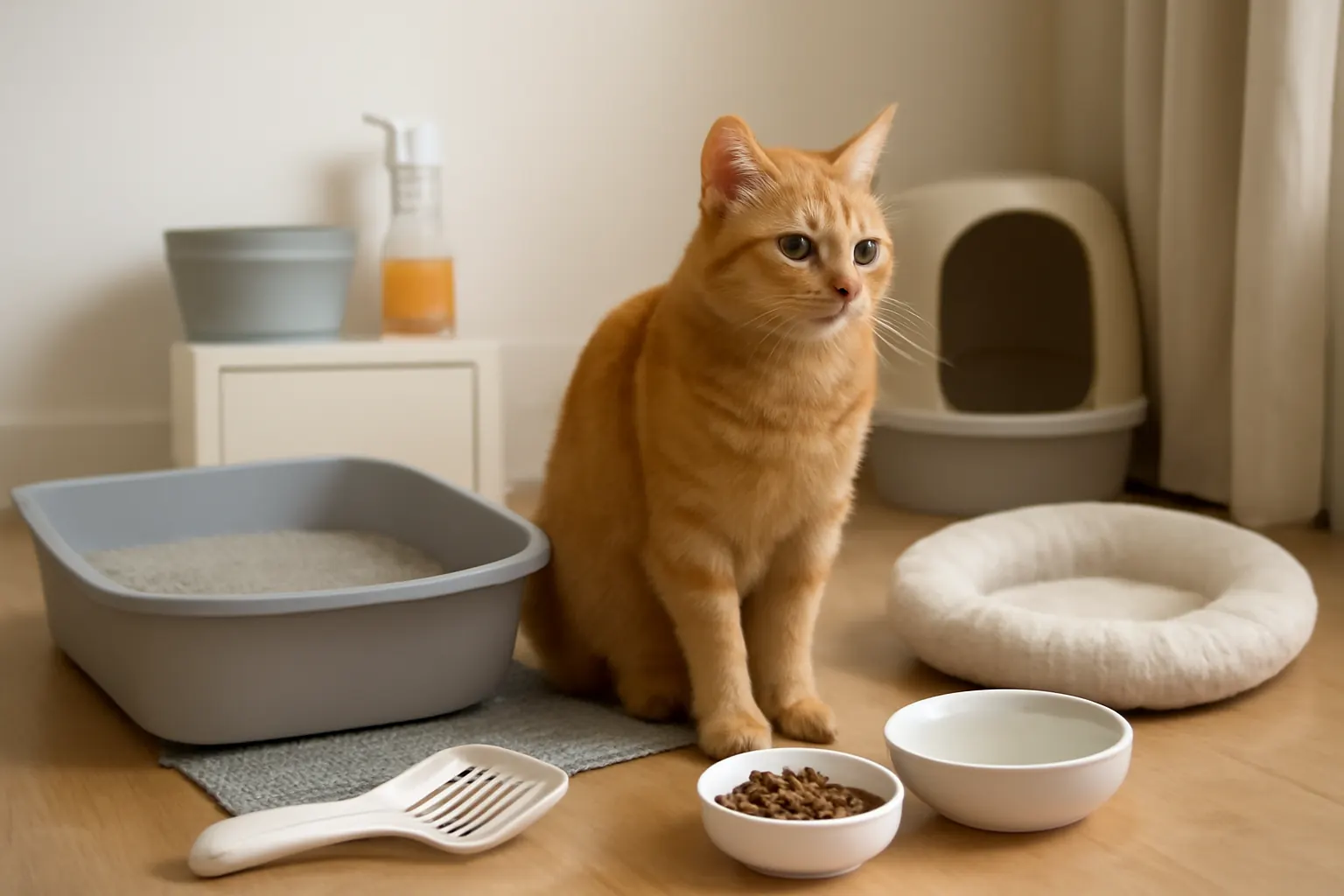
No. Cats instinctively avoid soiling near their eating area. Placing the box near food or water can cause stress, lead to litter box avoidance, and create unsanitary conditions. Keep the litter box in a separate location, ideally at least a few feet away or in a different room.
What if my apartment is a studio and there’s no separate room?
In a studio, dedicate a quiet corner as a litter station. Use a privacy screen or tall plant to visually separate the box from living areas. A large litter mat and an air purifier are essential to contain mess, and scoop at least twice daily since the box is in your main living space.